

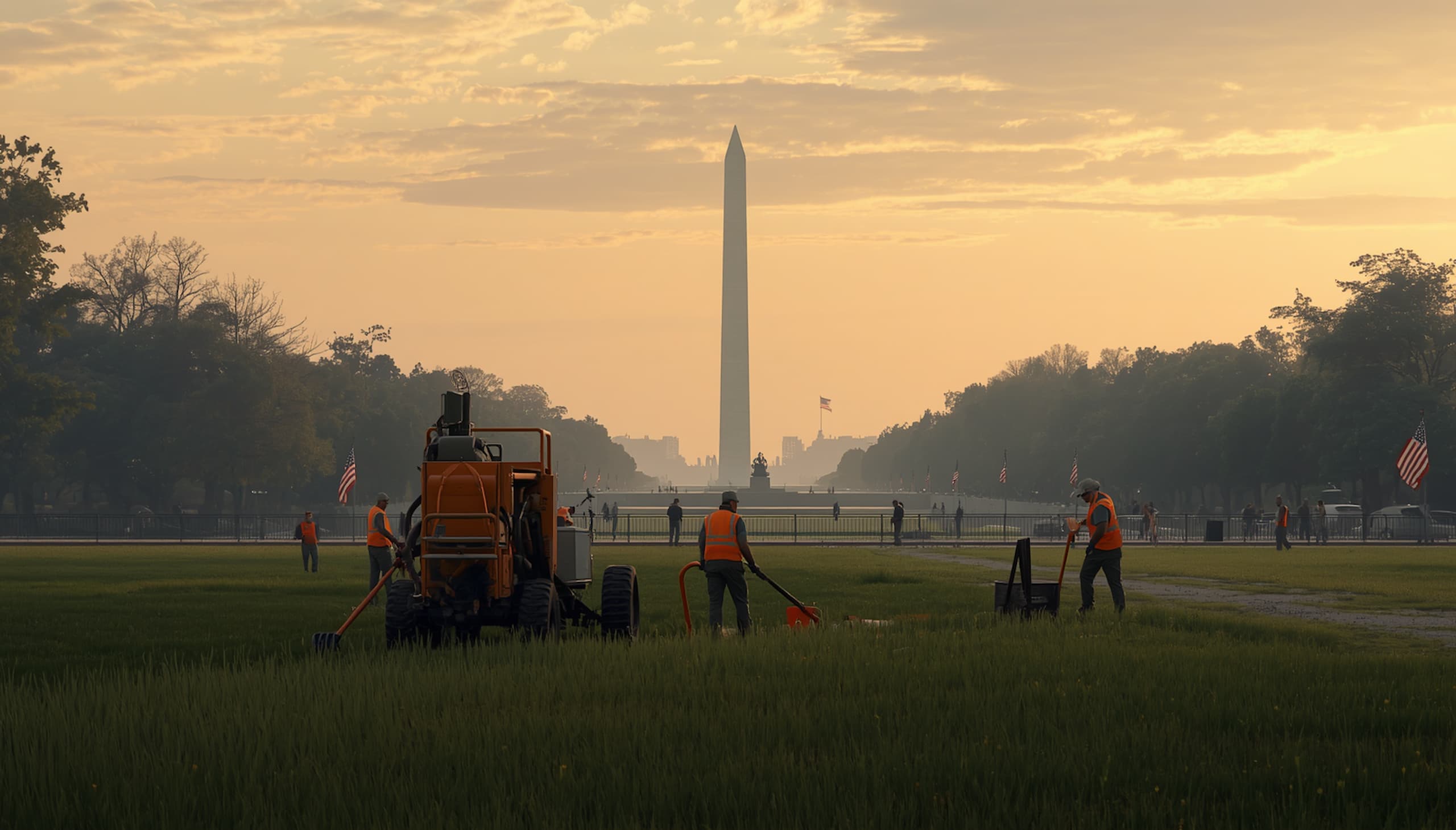
National Mall Fuel Cleanup Efforts: Shocking Spill Rocks America 250
National mall fuel cleanup efforts kicked into high gear after more than 30 gallons of diesel fuel leaked from commercial generators and seeped into the underground cistern network beneath one of the most visited landmarks in the United States (NBC News, 2026). The spill — linked to the May 17 Freedom 250 “Rededicate 250” event — contaminated four cisterns that together hold up to 250,000 gallons of rainwater used to irrigate the Mall’s grass. With a packed lineup of America 250 summer events on the horizon, the stakes for a fast, thorough cleanup could not be higher.
Why the National Mall Fuel Spill Went Viral
The national mall fuel cleanup efforts became front-page news because the damage struck at the literal roots of America’s most symbolic public space. More than 30 gallons of diesel from Freedom 250 generators infiltrated the four underground cisterns designed to collect and recycle rainwater for the Mall’s irrigation system — cisterns that together store up to 250,000 gallons (NBC News, 2026). That is not just a grass problem; it is a potential long-term threat to a water system built to preserve the National Mall for generations.
Freedom 250, a public-private partnership created by the Trump administration, organized the May 17 “Rededicate 250” event as part of the nation’s semiquincentennial celebrations. When the fuel story broke publicly on June 1, 2026, it rapidly spread across social media, news aggregators, and political commentary sites — fueled partly by the White House-adjacent origins of the event and partly by the striking image of an iconic American monument being literally polluted just weeks before its biggest summer in 250 years.
The Underground Cistern System: What Is at Risk
Most Americans walking the National Mall have no idea there is a sophisticated water recycling network running beneath their feet. The four cisterns affected by the national mall fuel cleanup efforts are a critical piece of the Mall’s sustainability infrastructure, capturing storm runoff and channeling it back to keep the grass healthy through Washington’s brutal summer heat. Environmental contractors and containment equipment were deployed as soon as the extent of the contamination became clear (Newsweek, 2026).
Diesel contamination in a closed water system is no minor issue. Fuel residue can persist in soil and water for months if not treated aggressively, potentially damaging turf roots and rendering sections of the Mall unusable for large gatherings. Crews shut down the Mall’s water distribution system almost immediately after the second incident on May 27 to prevent any cross-contamination from spreading further (DC News Now, 2026). For more on how environmental incidents shape World News, check out our ongoing coverage.
| Detail | Information | Source |
|---|---|---|
| Fuel Volume Spilled (Event 1) | More than 30 gallons of diesel | NBC News, 2026 |
| Trigger Event | Freedom 250 “Rededicate 250” event, May 17 | NBC News, 2026 |
| Cisterns Affected | 4 underground cisterns | Newsweek, 2026 |
| Total Cistern Capacity | Up to 250,000 gallons | NBC News, 2026 |
| Second Incident Date | May 27 — light tower fuel line cut | DC News Now, 2026 |
| Cleanup Status (as of Jun 3) | Ongoing — environmental contractors deployed | Newsweek, 2026 |
Timeline of Events: National Mall Fuel Cleanup Efforts From Day One
Piecing together the full picture of the national mall fuel cleanup efforts requires following two separate incidents, both tied to Freedom 250 operations. The first fuel release happened on May 17, the same day as the “Rededicate 250: A National Jubilee of Prayer, Praise and Thanksgiving” event, when fuel from commercial generators seeped into the underground cistern network (NBC News, 2026). The contamination was not publicly reported until June 1 — nearly two weeks later.
A second incident unfolded on May 27 when an individual cut a fuel line connected to a light tower on the Mall. DC News Now confirmed that the water distribution system was immediately shut down after this second incident, drainage lines were flushed and cleaned, and the light tower was removed from the site (DC News Now, 2026). Freedom 250 organizers framed both events as deliberate acts of sabotage — but federal authorities had not publicly confirmed that account as of June 3, 2026.
Freedom 250’s Response and the Vandalism Claim
The official statement from Freedom 250 spokeswoman Rachel Reisner placed full responsibility on outside actors: the organization said its equipment had been “repeatedly targeted by vandals” and that it mobilized a cleanup response within minutes of discovering the damaged generator fuel line, working “in close partnership with the National Park Service” (NBC News, 2026). That framing matters politically — Freedom 250 is a public-private partnership created directly by the Trump administration to organize events around the nation’s 250th birthday.
Whether the damage was vandalism or something else remains unresolved. US Park Police launched an investigation into the May 27 light tower incident, but no arrests had been announced by publication time (7News WJLA, 2026). The accountability question is equally murky: under National Park Service guidelines, the permit holder for a large event is typically liable for environmental mitigation costs, yet it remains unclear if Freedom 250 or its event partner Event Strategies Inc. will foot the cleanup bill (Newsweek, 2026). Follow our Trending & Viral section for the latest updates as this story develops.
What the National Mall Cleanup Timeline Looks Like
Environmental cleanup of diesel-contaminated water systems is not a quick fix. Contractors must pump out affected cisterns, test water and soil samples, and decontaminate pipe networks before the irrigation system can safely return to service. The timeline for the national mall fuel cleanup efforts is particularly compressed because the Great American State Fair — a 16-day World’s Fair-scale event running June 25 through July 10 — is scheduled to draw massive crowds to the very same grounds (7News WJLA, 2026).
Beyond the State Fair, an IndyCar race and multiple Fourth of July events are also lined up on the Mall for summer 2026. Sources familiar with the cleanup told Newsweek that the spill has intensified existing concerns about the Mall’s ability to handle the physical strain of back-to-back mega-events when its turf and infrastructure are already under pressure (Newsweek, 2026). The national mall fuel cleanup efforts are therefore not just an environmental story — they are a logistical emergency with a hard deadline.
Reaction Roundup: How the Public and Officials Responded to Cleanup Efforts
Once the national mall fuel cleanup efforts hit the news cycle on June 1-2, 2026, reactions spread fast across the political spectrum. Progressive commentators focused on the environmental angle — diesel in a rainwater recycling system beneath a national landmark felt like a striking symbol of careless event management. Conservative voices, meanwhile, amplified Freedom 250’s vandalism narrative, casting the incidents as deliberate attempts to derail patriotic celebrations (IBTimes UK, 2026).
On X (formerly Twitter), hashtags related to Freedom 250 and the National Mall trended for several hours on June 2, with a mix of outrage, dark humor, and partisan back-and-forth. Environmental groups called for a full independent investigation and transparent reporting on the extent of cistern contamination. Meanwhile, National Park Service officials and event organizers were described as actively assessing how the contamination could affect upcoming event permits and safety requirements (Newsweek, 2026).
What Experts and Locals Are Saying About National Mall Fuel Cleanup
Environmental professionals who spoke to outlets covering the story noted that the scale of the national mall fuel cleanup efforts will depend heavily on how deeply the diesel penetrated the soil and cistern walls. Diesel is denser than water and can cling to concrete and organic material, meaning surface-level flushing may not be sufficient. Comprehensive remediation could require sediment removal and extended water-quality monitoring stretching weeks beyond the initial response (IBTimes UK, 2026).
Longtime DC residents and Mall advocates expressed frustration that one of America’s most cherished public spaces was put at environmental risk in the run-up to its most significant anniversary. The National Mall has undergone repeated restoration projects over the years after turf damage from large events, and the underground cistern system was itself part of those preservation investments (IBTimes UK, 2026). Losing it — even temporarily — would strike at the heart of the Mall’s long-term sustainability. Stay connected with our Entertainment section for coverage of the upcoming America 250 events and any further developments.
| Event | Dates | Concern Level |
|---|---|---|
| Great American State Fair | June 25 – July 10, 2026 | High — begins 22 days post-spill report |
| Fourth of July Celebrations | July 4, 2026 | High — peak attendance expected |
| IndyCar Race | August 2026 | Medium — turf damage cumulative risk |
| Ongoing Freedom 250 Installations | Through July 2026 | Under review — permits being assessed |
Final Thoughts
The national mall fuel cleanup efforts represent more than just a messy incident on America’s front lawn — they expose the tension between high-profile public spectacle and responsible stewardship of irreplaceable national infrastructure. The two most important takeaways: diesel contaminated four underground cisterns holding up to 250,000 gallons of irrigation water, and the cleanup must be completed before a summer-long gauntlet of massive events kicks off on June 25 (NBC News, Newsweek, 2026). Whether Freedom 250, the National Park Service, or some combination of agencies picks up the tab, every American has a stake in seeing the national mall fuel cleanup efforts succeed — because the Mall belongs to all of us. Keep tabs on the latest through our World News and Trending & Viral coverage.
What Do You Think?
Should Freedom 250 be held financially responsible for the national mall fuel cleanup efforts, or was vandalism truly to blame? Drop your take in the comments below and share this article to keep the conversation going.
Frequently Asked Questions
How many gallons of fuel spilled on the National Mall during the Freedom 250 event?
The national mall fuel cleanup efforts were triggered by a spill of more than 30 gallons of diesel from commercial generators used during the May 17 “Rededicate 250” event (NBC News, 2026). That fuel seeped into four underground cisterns with a combined capacity of up to 250,000 gallons. A second incident on May 27 involved a cut fuel line on a light tower, though the exact volume from that event was not confirmed as of early June 2026.
Who is responsible for paying for the National Mall fuel cleanup costs?
Under National Park Service guidelines, the permit holder for a large event is typically liable for environmental mitigation after a spill of this scale (Newsweek, 2026). However, it remains unclear as of June 3, 2026 whether Freedom 250 or its partner Event Strategies Inc. will cover the national mall fuel cleanup efforts costs. NPS guidelines generally require commercial liability insurance as a permit condition for large events, which may factor into the final cost-assignment decision.
Will the National Mall fuel spill affect the summer 2026 America 250 events?
It very well could. The national mall fuel cleanup efforts must be completed before the Great American State Fair opens June 25, 2026 — a 16-day event of World’s Fair scale (7News WJLA, 2026). National Park Service officials and event organizers are actively assessing how contamination could affect upcoming permits and safety requirements (Newsweek, 2026). If cistern decontamination is incomplete, irrigation failure could damage the turf ahead of months of heavy foot traffic.
What are the underground cisterns beneath the National Mall and why do they matter?
The four cisterns beneath the National Mall form a rainwater capture and recycling system built to irrigate the Mall’s grass sustainably. Together they hold up to 250,000 gallons of collected storm runoff (NBC News, 2026). The national mall fuel cleanup efforts center on these cisterns because diesel contamination can damage the infrastructure, degrade water quality, and ultimately kill the turf that hosts millions of visitors each year — especially during high-use summers like 2026.
References
- NBC News — 30 gallons of fuel spilled on National Mall after event for America’s 250th birthday
- Newsweek — Fuel Spill Puts Summer’s Biggest National Mall Events in Jeopardy
- DC News Now — Crews contain fuel spill on National Mall after light tower line snipped
- 7News WJLA — Gas leak on National Mall likely caused by vandals as crews prepare for America250 events
- IBTimes UK — Vandalism or Accident? Over 30 Gallons of Fuel Spill on National Mall During America’s 250th Anniversary