

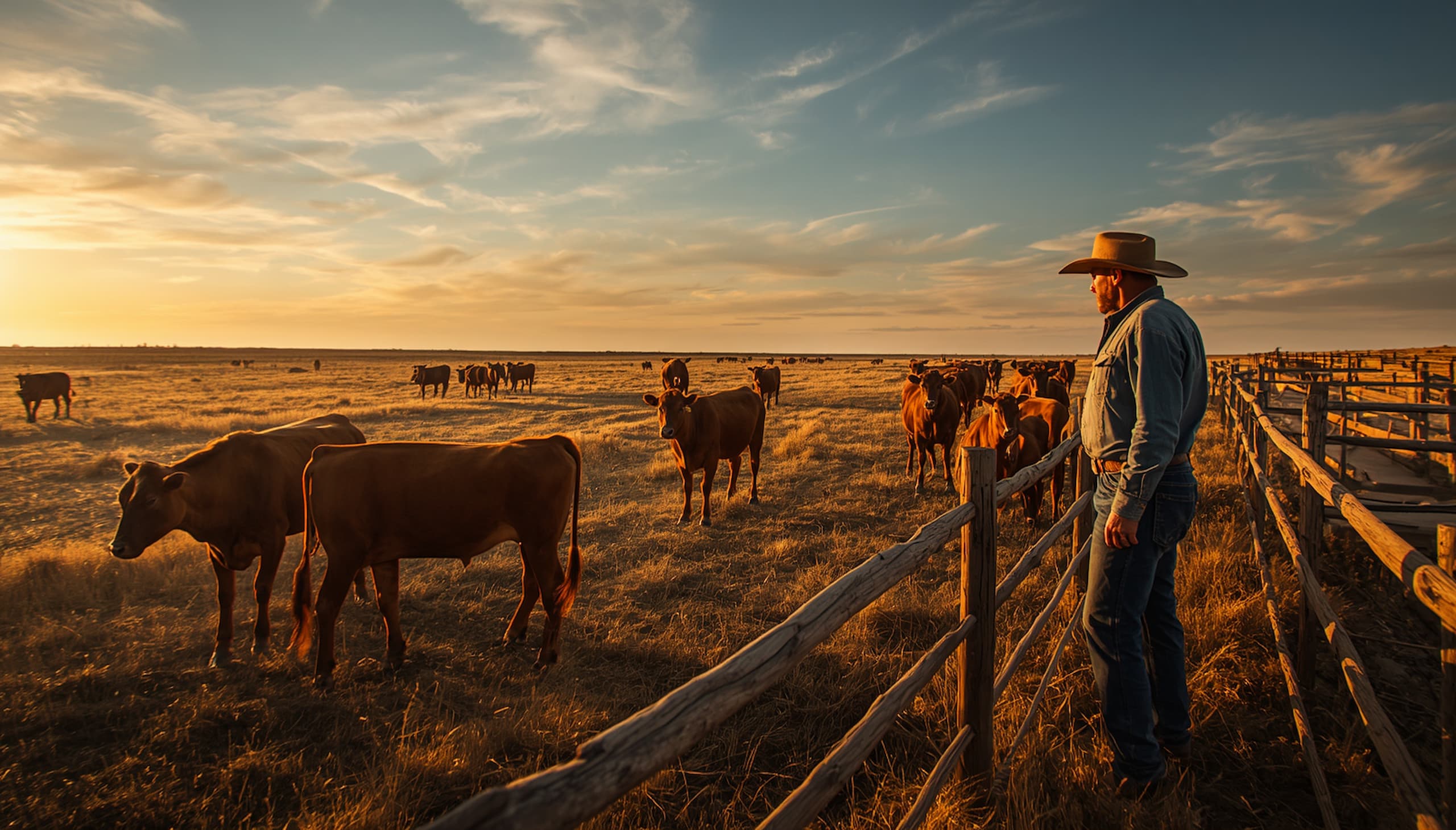
Profitable Tips for Cow-Calf Producers in the 2026 Cattle Herd Crisis
Cow-calf producers 2026 are staring down a crisis decades in the making: the U.S. cattle inventory has collapsed to 86.2 million head as of January 1, 2026 — the smallest cattle herd since the Truman administration (USDA, 2026). With beef prices surging 7% year-over-year and the Mexico border still closed to feeder imports, tight supply has turned into a generational profit window. This guide breaks down exact cost benchmarks, proven herd-rebuilding strategies, and the new USDA regulations every producer must understand right now.
Why the 2026 Cattle Herd Crisis Is a Producer Opportunity
The U.S. cattle herd has contracted for seven consecutive years, reaching 86.2 million head on January 1, 2026 — a 75-year low, down 300,000 head from 2025 (USDA Cattle Inventory Report, 2026). For cow-calf producers 2026 who have survived the contraction phase, that scarcity translates directly into record-high calf prices and the strongest per-head margins in a generation. The 5-area fed steer price is forecast to average USD 240 per hundredweight in 2026, up 7% from 2025 (USDA Agricultural Outlook Forum, 2026).
Cash receipts for beef cattle have climbed 39% from 2020 through USDA’s 2026 forecast, making beef cattle one of the few bright spots in an otherwise challenging agricultural economy (American Farm Bureau Federation, 2026). Producers who hold quality breeding females, maintain pasture, and lock in price risk through CME futures are positioned to capture that value. The cycle has officially shifted — cow liquidation is in the rearview, and heifer retention is underway.
The Supply Squeeze Behind the Opportunity
Two simultaneous shocks have deepened the cattle supply crunch beyond the typical cycle bottom. First, the U.S.-Mexico border remains closed to livestock imports due to the New World screwworm outbreak, cutting off roughly 1.2 to 1.5 million head of feeder cattle that normally enter U.S. feedlots annually (American Farm Bureau Federation, 2026). Second, the beef cow herd stands at just 27.6 million head — its lowest level since 1961 (USDA, 2026). Together, these forces keep feeder cattle prices elevated through at least 2027.
Herd expansion is underway but moving slowly. Farm Credit’s Cattle Customer Survey found that about half of operations bred more females in 2025 than in 2024, and nearly half plan to increase breeding females in 2026 (Farm Credit, 2026). However, range and pasture conditions — particularly persistent drought across the Southern and Central Plains — are limiting how fast producers can scale. For more context on how drought and feed costs affect livestock planning, visit our Farming & Livestock resource hub.
Cost Breakdown: What It Costs to Run a Cow-Calf Operation in 2026
Understanding your cost of production is the single most important step any cow-calf producer 2026 can take before expanding the herd. The average cost to raise a beef animal to market weight now exceeds USD 1,200 to USD 1,500 per head across most U.S. operations, with feed accounting for 60 to 70% of total operating budgets (Farm Life HQ, 2026). Feed costs are a relative bright spot this year: USDA projects corn, soybean meal, and alfalfa hay prices to continue their downward trend in 2026, following a record 2025/26 corn crop (USDA Livestock and Poultry Outlook, 2026).
Despite lower feed costs, input pressures elsewhere are significant. Labor shortages, fuel, fertilizer, and equipment maintenance are squeezing margins — especially for smaller operations. Beef cattle operators now average 58.3 years old, the oldest of any U.S. livestock group, meaning many operations are also absorbing succession-planning costs (2022 Census of Agriculture). Cow-calf producers 2026 who track cost-per-cow rather than just gross revenue will be best equipped to survive a price correction.
2026 Cow-Calf Cost Breakdown by Category
The table below provides a representative cost structure for a mid-size cow-calf operation in 2026. Actual costs vary by region, herd size, and owned versus leased land. Producers should benchmark their own numbers against these ranges using university extension budgets — Extension.org publishes free, state-specific enterprise budgets updated annually. For producers also interested in diversifying income through small-scale crops, our guide on Gardening & Plants covers complementary strategies for mixed-use farm operations.
| Cost Category | Low Estimate (USD) | High Estimate (USD) | Share of Total Cost |
|---|---|---|---|
| Feed and Forage | 720 | 1,050 | 60 to 70 percent |
| Veterinary and Health | 65 | 120 | 5 to 8 percent |
| Labor | 90 | 180 | 7 to 12 percent |
| Fuel and Machinery | 55 | 110 | 4 to 7 percent |
| Breeding and Genetics | 40 | 90 | 3 to 6 percent |
| Land and Facility Overhead | 150 | 300 | 12 to 20 percent |
Strategies to Control Costs While Expanding
The current cattle market rewards expansion, but expansion at any cost is a recipe for financial risk. Cow-calf producers 2026 who focus on profit per cow — rather than head count alone — will weather any price correction far better than those chasing volume. Producers with access to owned or long-term leased pasture have a significant structural cost advantage, since land costs remain the second-largest driver of overhead.
On the feed side, forward-contracting hay and supplemental feed inputs at current softer prices locks in a cost advantage before any supply disruption can reverse the trend. USDA projects hay stocks on December 1, 2025 at 81.7 million tons, a slight increase from the previous year, keeping alfalfa hay prices stable and below recent highs (USDA Livestock and Poultry Outlook, 2026). Producers should also review their bull battery — high-conception-rate bulls maximize the number of calves per breeding-season dollar spent.
Common Challenges Facing Cow-Calf Producers in 2026 and How to Solve Them
Record calf prices make the 2026 cattle herd crisis look straightforward on paper, but cow-calf producers face a layered set of operational and financial headwinds that complicate the expansion decision. Drought remains the leading production constraint, with range and pasture conditions cited as the top limiting factor for producers who declined to expand breeding herds in 2026 (Farm Credit, 2026). Drought reduces forage availability, drives up supplemental feed costs, and forces early culling that undermines herd-building efforts.
Labor scarcity compounds the problem. Skilled ranch labor is hard to find and harder to retain, raising per-animal labor costs at exactly the moment producers want to scale up. The average beef cattle operator is 58.3 years old (2022 Census of Agriculture), creating a succession gap that is both an industry-wide challenge and an opportunity for younger entrants willing to absorb operations from retiring producers.
The Heifer Retention Dilemma
The most acute strategic tension for cow-calf producers 2026 is the heifer retention decision. Selling a quality heifer at today’s record prices generates immediate cash. Keeping her for breeding sacrifices that cash flow but adds a productive cow to the herd for the next 8 to 10 years. High-quality bred cows and heifers are expected to remain expensive through the rebuild period, meaning the replacement cost of selling today is high (Farm Credit, 2026).
A blended approach works best for most operations: sell a portion of heifers that fall below your genetic threshold, and retain the top end of the heifer calf crop for herd expansion. This strategy preserves cash flow while steadily improving herd genetics — a critical factor because the biological lag means today’s heifer retention decisions will not show up as market calves until 2028 or 2029.
Managing Price Risk in a Volatile Market
With fed steer prices forecast at a record average of USD 240 per hundredweight (USDA, 2026), the temptation to ride the market is real. But cow-calf producers 2026 who rely entirely on cash prices expose themselves to the cycle’s eventual turn. CME feeder cattle futures and options allow producers to lock in a floor price on calves while retaining upside potential. Locking in prices through cattle futures or options can protect against sudden market dips (AgAmerica, 2025).
Livestock Risk Protection (LRP) insurance, administered through USDA’s Risk Management Agency, is another tool specifically designed for cow-calf and stocker operators. LRP covers feeder and fed cattle and does not require a minimum herd size, making it accessible to smaller operations that cannot effectively use futures markets. Producers should consult a crop insurance agent or their local USDA Farm Service Agency office to assess coverage levels appropriate for their operation size and marketing timeline.
| Indicator | 2025 Value | 2026 Forecast | Direction |
|---|---|---|---|
| Total US Cattle Inventory (million head) | 86.5 | 86.2 | Down 0.3% |
| Beef Cow Inventory (million head) | 27.9 | 27.6 | Down 1% |
| 5-Area Fed Steer Price (USD per cwt) | 224 | 240 | Up 7% |
| US Beef Production Forecast (billion lb) | 26.0 | 25.5 | Down 1.9% |
| Mexico Border Feeder Cattle Imports (million head/yr) | 1.2 to 1.5 | 0 (border closed) | Fully disrupted |
USDA Regulations Cow-Calf Producers Must Know in 2026
The regulatory landscape changed materially for cow-calf producers 2026 starting January 1, when USDA’s new voluntary “Product of USA” labeling rule took effect. Under the final rule from USDA’s Food Safety and Inspection Service (FSIS), the “Product of USA” or “Made in the USA” label may only appear on beef, poultry, and egg products if the animal was born, raised, slaughtered, and processed entirely in the United States (USDA FSIS, 2026). The old standard allowed beef processed domestically from imported cattle to carry the same label — a loophole that disadvantaged domestic producers for nearly a decade.
Enforcement is active. FSIS issued Directive 7221.1 in December 2025, instructing inspectors to verify voluntary U.S.-origin claims and requiring that documentation be provided within 24 hours of a request (USDA FSIS, 2025). For cow-calf producers 2026, this is good news: it protects the premium value of domestically born and raised cattle, and allows honest marketing of your product directly to consumers, retailers, and restaurateurs who increasingly pay a premium for verified American beef.
Documentation Requirements Under the New USDA Rule
Cow-calf producers 2026 who sell directly or through branded programs need to maintain records demonstrating that their animals were born, raised, slaughtered, and processed in the United States. Processors must also show that major product ingredients — excluding spices and flavorings — are of U.S. origin (USDA FSIS, 2026). Producers selling into labeled retail supply chains should confirm that their buyer’s compliance documentation covers the full animal-origin chain, since liability can extend upstream to the ranch of origin.
The USDA plan also aims to expand meat processing capacity at small and regional processors, reduce regulatory hurdles for herd expansion, and open more grazing lands for production (Texas Farm Bureau, 2026). No direct producer payments are included in the initiative; instead, USDA frames it around infrastructure investment, market transparency, and the “Product of USA” labeling upgrade. Cow-calf producers 2026 should contact their local USDA Farm Service Agency office to stay current on any new grazing lease opportunities or environmental compliance requirements tied to expanded pasture use.
Livestock Risk Protection and USDA Safety Net Programs
Beyond labeling, cow-calf producers 2026 should review participation in USDA’s Livestock Forage Disaster Program (LFP) and Emergency Livestock Assistance Program (ELAP) if drought conditions affect forage availability. Both programs are administered through the Farm Service Agency and provide compensation for forage losses on owned or leased pasture. Enrollment deadlines are strict, so producers should register their livestock operation with FSA before a disaster event occurs rather than after.
The Conservation Reserve Program (CRP) is another USDA tool relevant in 2026: USDA has signaled intent to open portions of CRP acreage for emergency haying and grazing during severe drought, which can provide a critical forage bridge during the tightest grazing months. Producers enrolled in CRP should monitor USDA announcements through their county FSA office and be prepared to request emergency use authorizations quickly, as approval windows can close within days of announcement.
Frequently Asked Questions
How long will the US cattle herd crisis last for cow-calf producers?
The cattle herd crisis is expected to persist through at least 2027, with meaningful herd expansion unlikely until 2028 at the earliest (USDA, 2026). For cow-calf producers 2026, this means elevated calf prices and strong demand should continue for the near term. The biological lag — it takes roughly three years from heifer retention to marketable calf — means the current supply crunch is structurally locked in regardless of how aggressively producers expand now.
What does the new USDA “Product of USA” rule mean for cow-calf producers in 2026?
Effective January 1, 2026, cow-calf producers 2026 who raise cattle born, grown, slaughtered, and processed entirely in the United States can now claim the “Product of USA” label — a distinction previously diluted by foreign-born cattle processed domestically (USDA FSIS, 2026). This creates a meaningful marketing premium for fully domestic operations. Producers must maintain documentation covering the full animal life cycle and be prepared to provide it to USDA inspectors within 24 hours upon request.
Should cow-calf producers sell heifers or retain them for breeding in 2026?
Most industry analysts recommend a blended approach for cow-calf producers 2026: sell heifers that fall below your genetic performance threshold at today’s record prices, but retain your top-end heifer calves for herd expansion. High-quality bred heifers are expected to remain expensive through 2027, making the replacement cost of selling today significant (Farm Credit, 2026). Producers in drought-affected regions may need to prioritize pasture capacity before committing to retention.
What USDA programs can help cow-calf producers during the 2026 cattle crisis?
Cow-calf producers 2026 have access to several USDA safety net programs. Livestock Risk Protection (LRP) insurance helps lock in a price floor on feeder and fed cattle without requiring futures market access. The Livestock Forage Disaster Program (LFP) compensates for forage losses on owned or leased land during drought. USDA has also outlined plans to open more grazing lands, reduce regulatory expansion hurdles, and strengthen small processor capacity to support domestic supply (Texas Farm Bureau, 2026).
Final Thoughts
The cattle herd crisis has created the most favorable price environment for cow-calf producers 2026 in a generation — but capturing that value requires disciplined cost management, smart heifer retention decisions, and a clear understanding of the new USDA regulatory landscape. The “Product of USA” rule now gives fully domestic operators a genuine marketing edge, while Livestock Risk Protection and FSA disaster programs provide a financial backstop against drought and price swings. Stay current on emerging market news and strategies by bookmarking our Farming & Livestock section, updated weekly with data-backed analysis for producers at every scale.
What Do You Think?
Are you retaining heifers for the rebuild or selling at record prices? Drop your strategy in the comments below — your experience helps other producers navigate the 2026 cattle market. Share this article with a rancher who needs it.
References
- USDA Economic Research Service — Cattle and Beef: Market Outlook 2026
- USDA Agricultural Outlook Forum — Livestock and Poultry Outlook, February 2026
- American Farm Bureau Federation — Smaller Cattle Herd Creates Market Volatility, 2026
- USDA FSIS via Wiley Law — USDA’s Product of USA Rule Takes Effect: January 2026
- Farm Credit / Terrain — A Cautious Start to Herd Rebuilding, February 2026
- Texas Farm Bureau — USDA Announces Plan to Rebuild US Beef Herd and Lower Retail Prices