

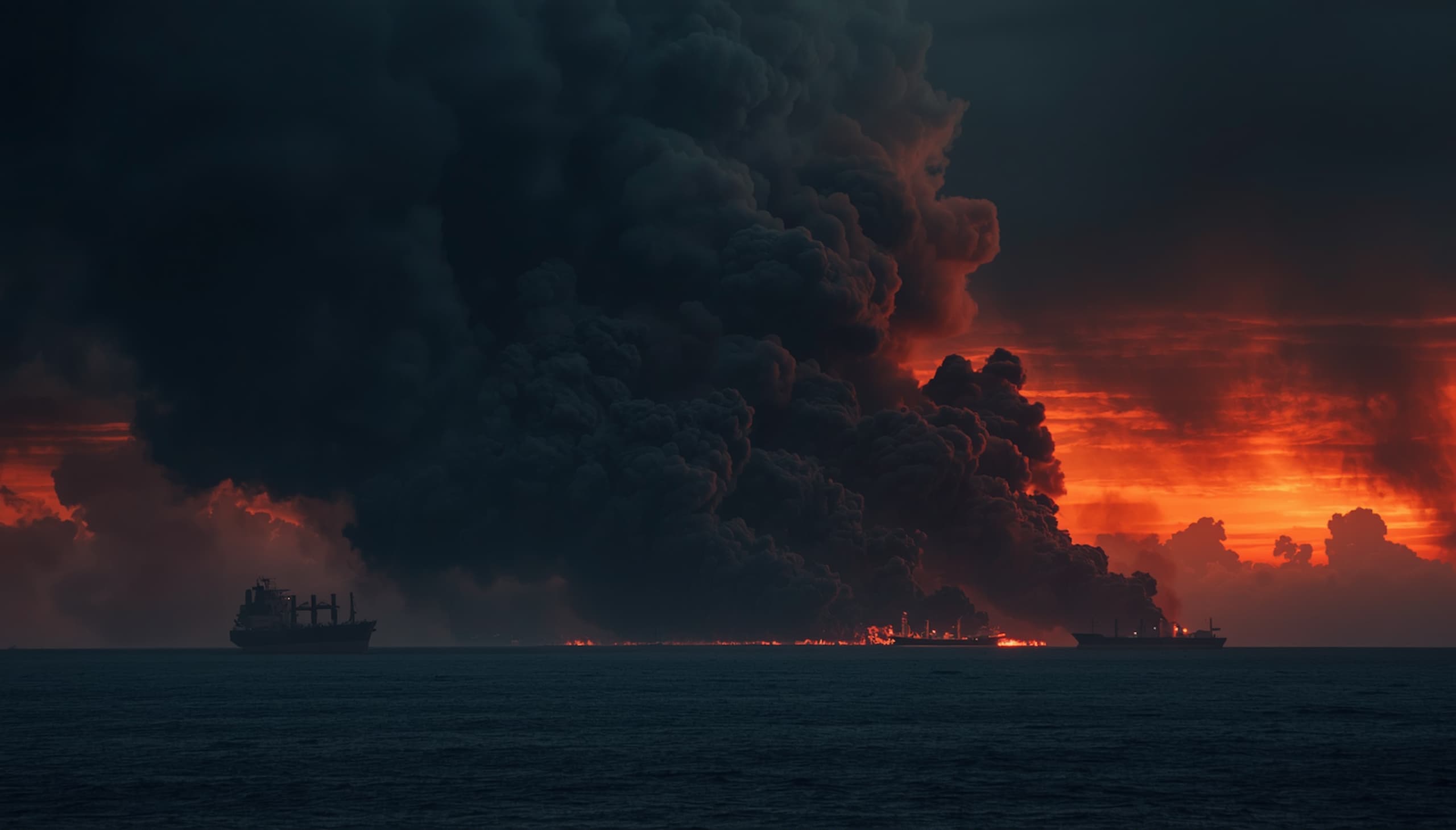
Iran War 2026: Crisis Reshapes the Middle East
Iran war — On February 28, 2026, the United States and Israel launched nearly 900 airstrikes on Iran in just 12 hours, triggering the largest military confrontation in the Middle East in a generation. The conflict has killed thousands, blocked the Strait of Hormuz, and pushed global oil prices above USD 120 per barrel at their peak, according to the International Energy Agency. This article breaks down the origins of the iran war, its sweeping impact on American households, global diplomatic reactions, and where negotiations stand today.
Background and Context of the Iran War
The iran war did not emerge from a vacuum. Decades of tension between Washington and Tehran — rooted in the 1979 Islamic Revolution and the subsequent hostage crisis — set the stage for confrontation. More immediate triggers included Iran’s accelerating nuclear program, its ballistic missile capabilities, and the collapse of the 2015 Joint Comprehensive Plan of Action (JCPOA) nuclear deal (Britannica, 2026). By early 2026, diplomacy had stalled and military planning had advanced on both sides.
On February 28, 2026, Operation Epic Fury commenced. US and Israeli forces conducted nearly 900 strikes within 12 hours, targeting Iranian military installations, government buildings, and energy infrastructure. Among the first casualties was Supreme Leader Ali Khamenei, whose death in the opening salvos reshaped Iran’s chain of command overnight and triggered an immediate, massive retaliatory response (Britannica, 2026). Iran launched hundreds of ballistic missiles and thousands of drones across the broader region, striking Israel, US military bases, and several Gulf Arab states.
The Strait of Hormuz and the Energy Shock
Within days of the iran war’s opening strikes, Iran moved to close the Strait of Hormuz — the narrow waterway through which approximately 20 percent of the world’s traded oil normally flows. The International Energy Agency characterized the resulting supply disruption as “the largest in the history of the global oil market” (IEA via Wikipedia, 2026). Brent crude, which traded near USD 70 per barrel before hostilities began, surged past USD 120 per barrel by early March before peaking even higher as the conflict intensified.
On March 18, 2026, Israeli aircraft struck Iran’s South Pars gas field and the Asaluyeh oil refinery — a pair of strikes that damaged 12 percent of Iran’s total gas production and halted output at two major refineries (Wikipedia, 2026). Iran responded by cutting gas supplies to Iraq. The cumulative effect on regional and global energy markets was severe, drawing comparisons to the 1970s oil embargo and raising acute concerns about stagflation and recession across the world’s major economies.
| Date | Event | Significance |
|---|---|---|
| Feb 28, 2026 | US-Israel launch Operation Epic Fury; Khamenei killed | War begins; Iran’s supreme leader assassinated |
| Mar 4, 2026 | Strait of Hormuz effectively closed to shipping | Global oil supply crisis begins; Brent surges past USD 120 |
| Mar 18, 2026 | Israel strikes South Pars gas field and Asaluyeh refinery | 12% of Iran’s gas output disrupted; Iraq supply cut |
| Apr 7-8, 2026 | US and Iran agree to two-week ceasefire, mediated by Pakistan | First pause in fighting after more than five weeks of war |
| May 28, 2026 | US and Iran reach a Memorandum of Understanding on 60-day truce | Talks ongoing; Trump yet to formally approve deal |
Casualties and Human Cost of the Iran War
The human toll of the iran war has been staggering. As of the April ceasefire, combined casualties across all countries involved reached between 6,285 and 8,817 people killed, with more than 44,511 reported injuries (Wikipedia Casualties of the 2026 Iran War, 2026). Iran bore the heaviest losses, with estimates ranging from roughly 3,468 to more than 6,000 killed, while Lebanon — embroiled in a simultaneous resumption of the Israel-Hezbollah war — recorded at least 2,586 dead and more than 8,000 wounded as of late May (CNN, 2026).
US losses stood at 15 military personnel killed and 538 wounded, according to the same casualty tallies. Millions of civilians were displaced across the region, with more than one-sixth of Lebanon’s entire population forced from their homes. For broader context on regional conflicts and their human cost, follow our World News coverage updated daily.
What the Iran War Means for the United States
For American households, the iran war has translated into immediate and tangible economic pain. The national average price for a gallon of regular gasoline stood at USD 2.98 just two days before Operation Epic Fury launched on February 28, 2026. By March 17, AAA reported that average had climbed to USD 3.79 per gallon — and by March 31, the national average had topped USD 4.03 per gallon, the highest level since 2023, according to GasBuddy’s real-time tracker (AP, 2026; USA Today, 2026).
The driver behind those pump prices was straightforward: the Strait of Hormuz closure strangled the global oil supply, and Brent crude — the world’s benchmark — soared past USD 100 per barrel by March 30 for the first time since Russia’s invasion of Ukraine in 2022, ultimately reaching above USD 118 per barrel (USA Today, 2026). For every USD 10 rise in Brent crude, US retail gasoline prices increase by roughly 24 cents per gallon, energy analysts note — a figure that helps explain the sharp, rapid rise seen at the pump.
Iran War’s Broader Economic Hit on American Consumers
The economic fallout from the iran war extends well beyond the gas station. The Associated Press reported that nearly all goods — including food — that are bought and sold require transportation, and those logistics costs rise in lockstep with gasoline, diesel, and jet fuel prices (AP, 2026). Gregory Daco, chief economist at consulting firm EY-Parthenon, stated simply: “The longer this lasts, the more significant the shock would be.” Federal Reserve Chair Jerome Powell acknowledged in late March that the war was pushing up prices for American consumers, though he said long-term inflation expectations remained stable.
Meanwhile, the war’s fiscal cost to the US government has been enormous. The Pentagon assigned the conflict a price tag of USD 29 billion in direct military spending as of May 2026, though some lawmakers pushed back on that figure as too narrow. US Representative Ro Khanna put the full economic cost — including higher gas and food prices borne by ordinary Americans — at approximately USD 631 billion, or roughly USD 5,000 per household (Al Jazeera, 2026). The US Labor Department reported the Consumer Price Index rose 3.8 percent year-over-year in April 2026, the highest annual increase since 2023, with gasoline prices alone rising 5.4 percent in a single month.
The war also strained US military readiness. A new analysis published in May 2026 found the Pentagon will need years to replenish stockpiles of advanced weapons expended during the iran war (AP, 2026). The Pentagon simultaneously requested a historic USD 1.5 trillion in funding, with Chairman of the Joint Chiefs Dan Caine testifying that responding to China’s growing influence remained the top strategic priority — a difficult position to maintain while a major Middle East conflict was consuming resources. For more on the political dimensions of this conflict, see our Politics section.
| Indicator | Before War (Feb 26, 2026) | Peak During War |
|---|---|---|
| US avg gas price per gallon (regular) | USD 2.98 | USD 4.03+ (Mar 31, 2026) |
| Brent crude oil price per barrel | Approx USD 70 | USD 120+ (Mar 2026) |
| US Consumer Price Index (year-over-year) | Approx 2.5% (pre-war) | 3.8% (Apr 2026) |
| Pentagon direct war spending | N/A | USD 29 billion (as of May 2026) |
| Estimated full economic cost per household | N/A | Approx USD 5,000 (Rep. Khanna estimate) |
Global Reactions to the Iran War
The iran war triggered an immediate wave of international responses. Russia condemned the US and Israeli strikes from the first day, with its Foreign Ministry warning of potential humanitarian, economic, and “radiological” disaster (Washington Institute, 2026). Foreign Minister Lavrov called his counterparts in Tehran and Doha within hours, pledged to convene an emergency UN Security Council session, and the Kremlin welcomed what it later called a ceasefire deal while calling for a “comprehensive settlement.”
China’s reaction was similarly critical of Washington and Tel Aviv. Foreign Minister Wang Yi held a phone call with Lavrov on March 1 to coordinate their positions, and China convened the UN Security Council alongside Russia (Washington Institute, 2026). Beijing later said its foreign minister conducted 26 phone calls with regional counterparts and dispatched its Middle East envoy to shuttle across the war zone. When the April ceasefire was announced, China’s Foreign Ministry spokeswoman welcomed the deal, saying Beijing had “repeatedly” encouraged the parties to reach a pause and would “continue to make efforts to ease the situation” (Al Jazeera, 2026).
Europe, the UN, and the Path Toward a Lasting Iran War Settlement
European leaders walked a careful line in their responses to the iran war. French President Emmanuel Macron warned from the outset that fresh conflict between the US, Israel, and Iran would carry “severe consequences for international peace and security.” European Commission President Ursula von der Leyen welcomed the April ceasefire as bringing “much-needed de-escalation” and called further negotiations “crucial.” German Chancellor Friedrich Merz thanked Pakistan for its role as mediator and called for a “lasting end to the war” (Al Jazeera, 2026). Spanish Prime Minister Pedro Sanchez, a prominent European critic of the conflict, cautioned that the ceasefire represented only “momentary relief” that should not obscure “the chaos, the destruction, and the lives lost.”
Pakistan played a central role as a neutral broker. Together with China, it released a five-point peace initiative on March 31 calling for an immediate end to hostilities and the restoration of free navigation through the Strait of Hormuz (UK House of Commons Library, 2026). UN Secretary-General António Guterres welcomed the ceasefire but urged all parties toward a long-term settlement, while regional powers including Oman, Jordan, and Egypt called for a permanent end to hostilities. As of late May 2026, the US and Iran had reached a Memorandum of Understanding on a potential 60-day truce, though President Trump had yet to formally approve the agreement (Al Jazeera, 2026).
Final Thoughts
The iran war, which began on February 28, 2026, has already reshaped the Middle East and reverberated across the global economy in ways that analysts warn could take years to fully unwind. Two takeaways stand above all others: the closure of the Strait of Hormuz produced the most severe oil supply shock in history, and the human cost — measured in thousands dead, tens of thousands wounded, and millions displaced — continues to climb even as ceasefire talks advance. Staying informed is critical. Follow our World News section for the latest updates, and our Politics coverage for analysis on how the iran war is reshaping US domestic and foreign policy heading into the midterm elections.
What Do You Think?
Do you think the US was right to launch the iran war, or should diplomacy have been given more time? Share your perspective in the comments below — and if you found this article valuable, pass it along to someone who needs the full picture.
Frequently Asked Questions
Why did the US start the Iran war in 2026?
The iran war was triggered by Iran’s advancing nuclear program, its ballistic missile development, and the collapse of the 2015 JCPOA nuclear agreement. Failed diplomatic negotiations in early 2026 led the US and Israel to launch joint strikes on February 28, 2026, killing Supreme Leader Ali Khamenei and targeting military and energy infrastructure across the country (Britannica, 2026). Tensions stretching back to the 1979 Islamic Revolution formed the long-term backdrop.
How has the Iran war affected gas prices in the US?
The iran war has had a sharp and direct impact on US gas prices. The national average for a gallon of regular gasoline rose from USD 2.98 before the war began to above USD 4.00 by late March 2026, according to GasBuddy and AAA data. The Strait of Hormuz closure — which cut off roughly 20 percent of the world’s traded oil — drove Brent crude above USD 118 per barrel. Analysts warn that sub-USD 3.00 per gallon gas may not return for years (AP, 2026).
Is there a ceasefire in the Iran war right now?
A partial ceasefire in the iran war has been in effect since April 8, 2026, mediated by Pakistan. The two-week truce was subsequently extended, though both sides exchanged fire during the pause period. As of May 28, 2026, the US and Iran reached a Memorandum of Understanding on a proposed 60-day truce, though President Trump had not yet formally approved the agreement. Iran has stated it will not accept further temporary ceasefires and is pushing for a permanent end to hostilities (Al Jazeera, 2026).
How many people have been killed in the Iran war?
Casualty figures in the iran war vary by source. Wikipedia’s casualty tracker, drawing on multiple official and independent counts as of the April 2026 ceasefire, puts total deaths at between 6,285 and 8,817 across all countries involved, with more than 44,511 total injuries reported. Iran suffered the highest death toll, estimated at 3,468 to more than 6,000 killed. Lebanon recorded at least 2,586 deaths, Israel 47, and the US military lost 15 personnel (Wikipedia Casualties of the 2026 Iran War, 2026).
References
- Al Jazeera — Iran War Updates: US, Iran Reach MoU on 60-Day Truce — May 28, 2026
- Associated Press — How the Iran War and Surging Oil Prices Are Affecting Consumers at the Gas Pump and Beyond
- Associated Press — US Drivers See Gas Prices Jump to Highest Level Since 2023 as the Iran War Drags On
- Al Jazeera — Pentagon Gives New USD 29bn Iran War Price Tag, Downplays Munitions Concerns
- Britannica — 2026 Iran War: Explained — United States, Israel, Strait of Hormuz, Map and Conflict
- Al Jazeera — World Welcomes US-Iran Ceasefire, Urges Lasting Peace in the Middle East