

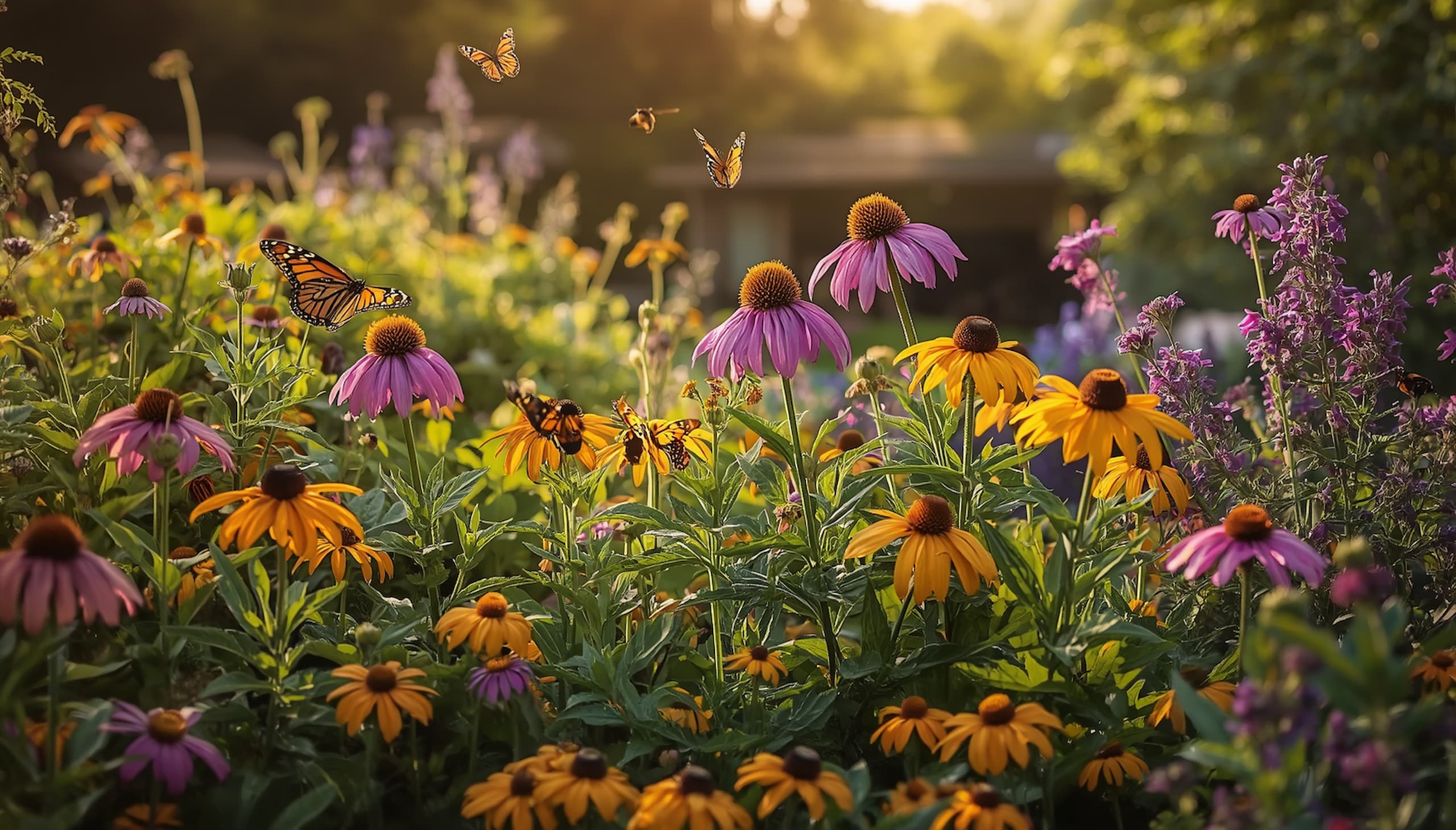
Best Pollinator Garden Plants to Grow in 2026
Pollinator garden plants are the undisputed breakout trend of the gardening world in 2026 — demand for native species has surged 82% since 2020, and pollinator-friendly habitats are now the top wish-list item for US backyard gardeners (Better Homes & Gardens, 2026). With monarch butterfly populations recovering and one in three bites of food depending on pollinators, the stakes for your garden have never felt more real. This guide gives you everything you need: the best plants to grow, a seasonal schedule, a care cheat sheet, and organic pest solutions so your pollinator garden thrives from spring through frost.
Pollinator Garden Plant Care Guide
Growing the best pollinator garden plants starts with understanding what each species actually needs. Native perennials like coneflower (Echinacea), bee balm (Monarda), and milkweed (Asclepias) are naturally low-maintenance once established, requiring less water and fertilizer than ornamental exotics (Old Farmer’s Almanac, 2026). The reward is an explosion of bees, monarchs, and hummingbirds from May through October.
Matching the right plant to the right spot is the single most important factor. Most flagship pollinator garden plants — including coneflowers, black-eyed Susans, and blazing star — need at least six hours of full sun per day. Shaded yards can still support pollinator garden plants like woodland phlox, native columbine, and foamflower, which thrive in dappled light and attract early-season bees and hummingbirds (Old Farmer’s Almanac, 2026).
| Plant Name | USDA Zones | Sun Needs | Pollinators Attracted | Bloom Season |
|---|---|---|---|---|
| Coneflower (Echinacea) | 3-9 | Full Sun | Bees, Butterflies, Goldfinches | Summer |
| Milkweed (Asclepias) | 3-9 | Full Sun | Monarch Butterflies, Bees | Summer |
| Bee Balm (Monarda) | 4-9 | Full to Part Sun | Hummingbirds, Bees, Moths | Midsummer |
| Black-Eyed Susan (Rudbeckia) | 3-9 | Full Sun | Bees, Butterflies, Birds | Summer to Fall |
| Blazing Star (Liatris) | 3-8 | Full Sun | Monarchs, Swallowtails, Bees | Late Summer |
| New England Aster | 4-8 | Full to Part Sun | Migrating Monarchs, Native Bees | Fall |
Soil, Water, and Feeding Tips for Pollinator Garden Plants
Most native pollinator garden plants evolved in lean soils, which means over-fertilizing is one of the most common mistakes new gardeners make. Heavy nitrogen applications push leafy growth at the expense of blooms — and fewer blooms means fewer pollinators. A light top-dressing of compost each spring gives plants all the nutrition they need without overloading them (Old Farmer’s Almanac, 2026). For more seasonal tips and companion planting ideas, browse our full archive of Gardening & Plants guides.
Watering needs are minimal once your pollinator garden plants are established — typically one growing season. During that first year, water deeply once or twice a week and mulch around the base of each plant to lock in moisture and suppress weeds. After establishment, rainfall in most US zones is sufficient for drought-tolerant natives like coneflower, blazing star, and butterfly weed. Deep, infrequent watering also encourages the deep root systems that make these plants so remarkably tough.
Choosing Pollinator Garden Plants by Region
The most effective pollinator garden plants are always those native to your specific region. Local pollinators and native plants have co-evolved over thousands of years, meaning a bee native to the Midwest will always prefer local coneflowers over imported Mediterranean lavender (Almanac.com, 2026). The Xerces Society and your state’s cooperative extension service both publish free regional plant lists to take the guesswork out of plant selection.
In the Northeast and Midwest, goldenrod, wild bergamot, and swamp milkweed are top performers. In the Southeast, blazing star, cardinal flower, and butterfly weed dominate. Western gardeners can lean on native buckwheat (Eriogonum), California poppy, and globe gilia. No matter where you garden, including plants with staggered bloom times — early spring through late fall — is the single best strategy for keeping your pollinator garden plants active all season long.
Seasonal Planting Guide for Pollinator Garden Plants
Timing your pollinator garden plants correctly is just as important as species selection. A well-planned garden offers nectar and habitat from the first warm days of March through the hard frosts of November, ensuring your local bees and butterflies always have a food source (Almanac.com, 2026). A diverse, multi-season approach also supports migrating monarchs, which need late-blooming nectar sources like goldenrod and New England aster to fuel their journey south each fall.
The backbone of any successful pollinator garden is a mix of perennials for long-term structure and annuals like zinnia, cosmos, and sunflower to fill seasonal gaps. Annuals are especially valuable in the first year, when perennials are still establishing their root systems. Direct-sow annuals in late spring for summer bloom, and allow seed heads to remain standing through winter — they provide critical food for overwintering birds and nesting material for native bees (Old Farmer’s Almanac, 2026).
| Season | Best Plants to Feature | Key Pollinators Supported | Planting Action |
|---|---|---|---|
| Early Spring (Mar-Apr) | Creeping phlox, native columbine, pulmonaria | Early bumblebees, mason bees | Plant bare-root perennials; divide established clumps |
| Late Spring (May-Jun) | Wild indigo, yarrow, native geranium | Bumblebees, swallowtail butterflies | Direct-sow zinnia and cosmos; transplant milkweed |
| Midsummer (Jul-Aug) | Coneflower, bee balm, milkweed, black-eyed Susan, blazing star | Monarchs, hummingbirds, native bees | Deadhead annuals; water new plantings during heat |
| Late Summer (Aug-Sep) | Goldenrod, Joe-Pye weed, ironweed, sedum | Migrating monarchs, fall bees | Plant fall perennials; let seed heads form |
| Fall (Oct-Nov) | New England aster, blue mistflower | Queen bumblebees, late-season monarchs | Plant spring bulbs; leave stems standing for habitat |
How to Design Your Pollinator Garden Layout
Designing pollinator garden plants for maximum impact means thinking in layers and clusters rather than rows. Group three to five plants of the same species together — pollinators identify patches of color from a distance, and clustered pollinator garden plants are visited far more often than isolated specimens (Almanac.com, 2026). Place taller species like common milkweed and Joe-Pye weed at the back of your bed, mid-height plants like coneflower and bee balm in the center, and low growers like creeping phlox and tickseed along the front edges.
Including flat, open flowers alongside tubular blooms ensures you serve a wide range of pollinators. Hummingbirds favor tube-shaped red and orange flowers like bee balm and cardinal flower, butterflies prefer the flat landing platforms of coneflowers and asters, and native bees are drawn to yellow, blue, and purple blooms like blazing star and wild bergamot. A mixed palette of pollinator garden plants covering all these shapes and colors delivers the broadest ecological value — and the most visual drama — all season long. For even more yard inspiration, explore our Home & DIY category.
Common Pests and Organic Solutions for Pollinator Garden Plants
Keeping your pollinator garden plants healthy without harming the very creatures you are trying to attract requires a careful, organic-first approach to pest management. Aphids are the most common threat, attacking tender new growth with soft, pear-shaped bodies that distort leaves and leave behind sticky honeydew residue (Gardening Know How, 2026). The good news: a healthy, diverse pollinator garden naturally recruits its own pest control team.
Conventional chemical insecticides are incompatible with pollinator garden plants — even a single application of a broad-spectrum pesticide can wipe out the beneficial insects that make your garden function. The goal is to keep pest populations in balance rather than eliminate them completely. A small aphid colony on your milkweed actually attracts ladybugs and lacewing larvae, both of which feed voraciously on aphids and go on to serve as pollinators as adults (Gardenary, 2024).
| Pest | Damage Signs | Organic Solution | Timing |
|---|---|---|---|
| Aphids | Curled, yellowing leaves; sticky black sooty mold | Strong water spray; release ladybugs; neem oil (evening) | Spring through summer |
| Thrips | Silvery streaks on petals; distorted blooms | Insecticidal soap; blue sticky traps; companion marigolds | Late spring to fall |
| Spider Mites | Fine webbing; stippled, bronzed foliage | Increase watering; neem oil spray; predatory mites | Hot dry spells in summer |
| Japanese Beetles | Skeletonized leaves; mass defoliation | Hand-pick at dawn; milky spore soil treatment | June through August |
| Powdery Mildew | White dusty coating on leaves (common on bee balm) | Improve air circulation; baking soda spray; resistant cultivars | Humid midsummer periods |
Neem Oil and Companion Planting: Your Best Organic Defenses
Neem oil is the most versatile organic solution for protecting pollinator garden plants from aphids, thrips, spider mites, and powdery mildew without harming bees. The critical rule: always apply neem oil in the late evening or early morning when pollinators are not actively foraging (UC Division of Agriculture and Natural Resources, 2026). Applying it mid-day risks direct contact with bees visiting open blooms, which can be harmful even with an organic product.
Companion planting is the most elegant, hands-off pest strategy for a pollinator garden. Marigolds planted as border plants act as a sacrificial first line of defense, drawing pests away from your prized native perennials (U.S. Fish & Wildlife Service, 2026). Dill, cilantro, and fennel in or near the garden attract lacewings and parasitic wasps that hunt aphids and caterpillar larvae. Building this web of beneficial relationships is the heart of a truly organic, self-sustaining pollinator garden — and it gets easier and more effective every year as your plant community matures.
Final Thoughts
Pollinator garden plants represent the most meaningful trend in 2026 gardening — one where your individual choices genuinely restore local ecosystems. The two most important takeaways: choose native species matched to your USDA zone, and plan for continuous bloom from early spring through fall so your garden supports pollinators all season long. Whether you start with three coneflowers in a container or redesign your entire backyard, every pollinator garden plant you add makes a difference. Explore more inspiration in our Gardening & Plants guides and take the next step this weekend.
What Do You Think?
Which pollinator garden plants are you adding to your yard this season — are you team milkweed for monarchs or all-in on coneflowers? Drop your answer in the comments below and share this article with a fellow gardener who deserves more butterflies in their life!
Frequently Asked Questions
What are the best pollinator garden plants for beginners in the US?
The easiest pollinator garden plants for beginners are coneflower (Echinacea), black-eyed Susan (Rudbeckia), and milkweed (Asclepias). All three are native perennials that thrive in full sun, tolerate drought once established, and return reliably each year. Native plant demand has risen 82% since 2020 (Better Homes & Gardens, 2026), and these three species alone can attract bees, monarchs, and goldfinches to nearly any US yard.
How do I start a pollinator garden in a small yard or container?
You can absolutely create a thriving pollinator garden plants display in pots, window boxes, or a small raised bed. Start with compact natives like dwarf black-eyed Susan, creeping phlox, and tickseed, paired with annual zinnia and cosmos for continuous color. Even a single container of pollinator garden plants on a porch provides valuable nectar for native bees, especially in urban areas where habitat is scarce (Almanac.com, 2026).
When should I plant milkweed to attract monarch butterflies?
Milkweed, the single most important pollinator garden plant for monarch butterflies, is best planted in spring when soil is cool and moist, giving plants time to establish before summer heat. Fall sowing is also ideal across most US zones — seeds stratify naturally over winter and germinate strongly in spring. Plant butterfly weed (Asclepias tuberosa) in full sun in a permanent location, as it develops a deep taproot that resents disturbance (Old Farmer’s Almanac, 2026).
Are pesticides safe to use on pollinator garden plants?
Most conventional pesticides are harmful and should never be applied to or near pollinator garden plants. Even organic options like neem oil require careful timing — always apply in the late evening or early morning when bees are not foraging (UC ANR, 2026). For safe pest management, rely on a strong water spray to dislodge aphids, ladybug releases, companion marigolds, and insecticidal soap applied precisely to affected areas while avoiding open blooms entirely.
References
- Better Homes & Gardens — 6 Garden Trends Experts Say Will Be Everywhere in 2026
- Old Farmer’s Almanac — How to Create a Pollinator Garden: Easy Steps and Best Plants for Beginners
- Old Farmer’s Almanac — How to Grow Milkweed: Planting, Care and Native Varieties for Monarchs
- Gardening Know How — How to Get Rid of Aphids Naturally: Most Effective Methods
- Almanac.com — Plants That Attract Pollinators by Gardening Zone
- Xerces Society — How to Control Garden Pests While Supporting Pollinators