

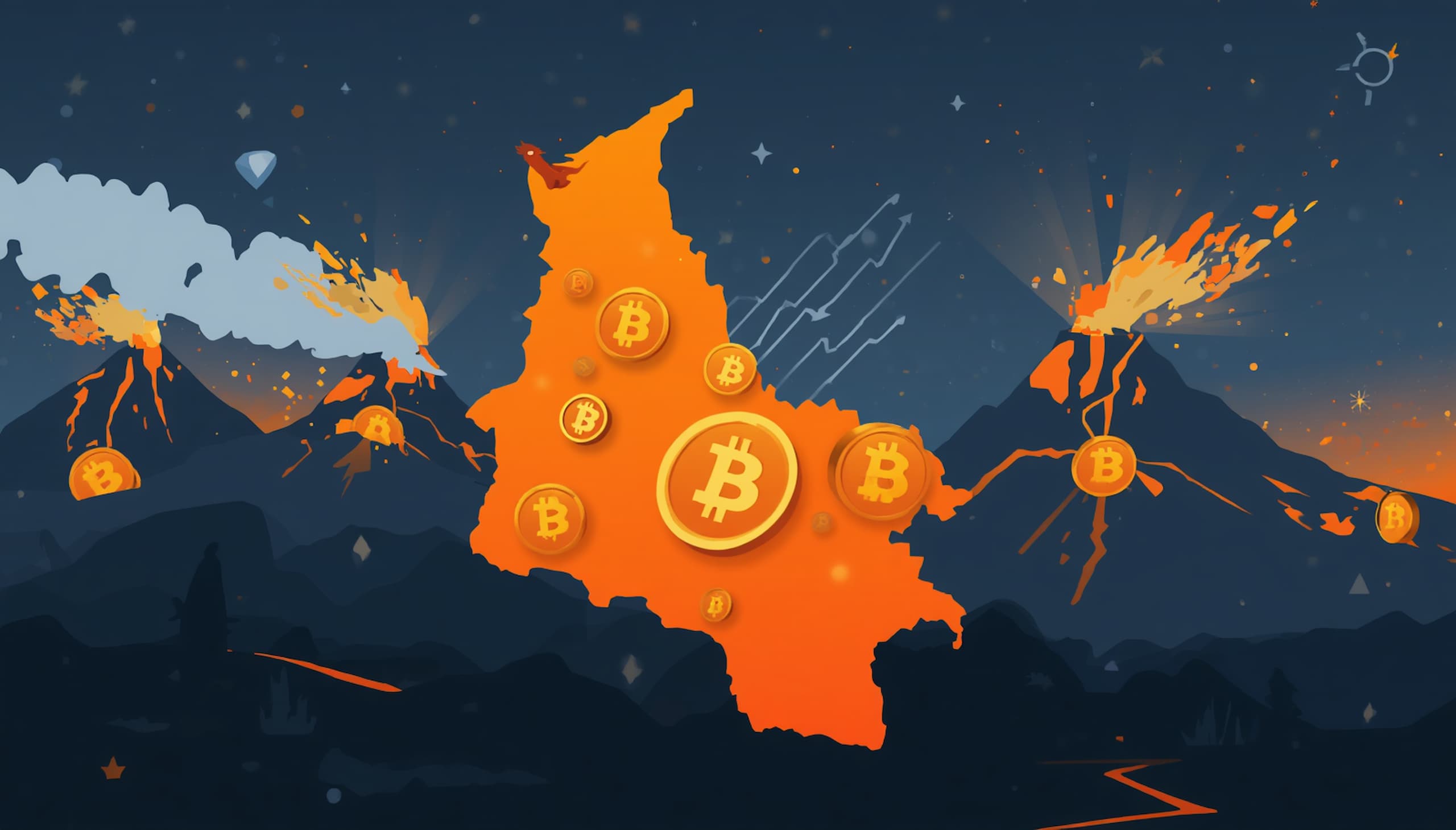
El Salvador Bitcoin Experiment: Must Know Lessons for the World
El Salvador Bitcoin experiment — the world’s first national Bitcoin adoption — has delivered a sobering but instructive verdict as of 2026. When President Nayib Bukele signed the Bitcoin Law in 2021, he promised financial inclusion for millions of unbanked citizens and cheaper remittances for a nation where those transfers equal nearly 25% of GDP (IMF, 2025). What followed was a four-year crash course in the gap between crypto ideology and economic reality — and the lessons apply to every country watching from the sidelines.
The Bitcoin Law: What El Salvador Actually Did
On June 9, 2021, El Salvador’s Legislative Assembly passed the Bitcoin Law by a 62-to-84 vote, making Bitcoin legal tender alongside the US dollar (CoinTelegraph, 2025). The law required all merchants to accept Bitcoin for payment and exempted Bitcoin transactions from capital gains tax. To drive adoption, the government launched the Chivo wallet — a state-backed digital app — and handed every citizen a USD 30 Bitcoin bonus to sign up.
The initial numbers looked promising. In its first months, the Chivo wallet attracted over 1.2 million registered users, and crypto-linked remittances spiked to 4.5% of all incoming transfers (IMF Staff Country Report, 2025). Bitcoin tourism buzz generated international headlines. El Salvador had positioned itself as the world’s laboratory for sovereign crypto adoption, a title no other government had dared claim. The El Salvador Bitcoin experiment was officially underway — and the world was watching.
How the Chivo Wallet Was Supposed to Work
The Chivo wallet was the experiment’s centerpiece. It allowed Salvadorans to hold both US dollars and Bitcoin, converting between them instantly. The government framed it as a bank account for the unbanked — roughly 70% of the population lacked access to traditional financial services at the time the law passed (IMF, 2025). By removing friction from peer-to-peer transfers, Bukele argued the wallet could disrupt remittance giants like Western Union and MoneyGram, which he claimed could lose up to USD 400 million in annual commissions if Salvadorans switched to Bitcoin (Reuters, 2021).
The reality diverged sharply from the pitch. A National Bureau of Economic Research survey found that 60% of Chivo users made no transaction beyond collecting the USD 30 sign-up bonus (IMF Staff Country Report, 2025). Technical glitches, identity theft incidents, and a steep learning curve eroded public trust rapidly. By mid-2022, new Chivo downloads had flatlined. You can read more about evolving Technology trends affecting digital wallets in our dedicated section.
Price Analysis: El Salvador’s Bitcoin Reserve Performance
Despite retreating on legal tender status, El Salvador doubled down on its Bitcoin treasury. By December 2025, the government held 7,509 BTC — accumulated through daily purchases, geothermal mining, and opportunistic buys during market dips (Ainvest, 2025). At Bitcoin prices in the USD 85,000–USD 105,000 range seen during late 2025 and early 2026, that reserve was valued at well over USD 600 million, representing one of the most profitable sovereign asset bets of the decade (KuCoin, 2026).
The road to those gains was turbulent. During the 2022 bear market, El Salvador’s holdings suffered deep unrealized losses as Bitcoin collapsed from roughly USD 69,000 to under USD 16,000. Moody’s downgraded El Salvador’s credit rating in 2021 partly over Bitcoin volatility concerns, and the IMF issued repeated warnings. The 2024–2025 bull cycle rescued the balance sheet, turning paper losses into substantial gains and validating the long-term hold strategy — at least on paper.
| Year | BTC Holdings | Est. Value (USD) | Key Event |
|---|---|---|---|
| 2021 | Approx. 1,100 BTC | ~USD 60 million | Bitcoin Law enacted, Chivo launched |
| 2022 | Approx. 2,300 BTC | ~USD 45 million | Bear market, Moody’s downgrade |
| 2024 | Approx. 5,800 BTC | ~USD 500 million | Bull market recovery, reserve value surge |
| Q3 2025 | 6,102–6,268 BTC | USD 550M–USD 770M | IMF loan secured, legal tender status dropped |
| Dec 2025 | 7,509 BTC | USD 650M+ | 1,098 BTC purchased in December alone |
Remittances: The Promise That Didn’t Deliver
One of the most concrete failures of the El Salvador Bitcoin experiment was in remittances. After peaking at 4.5% of total remittance volume in Bitcoin’s first months as legal tender, the crypto share of transfers fell to just 0.87% by December 2024 — and recovered only marginally to 0.71% of a USD 2.43 billion quarterly total in Q1 2026 (El Salvador Central Bank, 2026). Remittances represent nearly 25% of El Salvador’s GDP, making this a high-stakes miss.
The core problem was friction. Traditional remittance services, while expensive, were familiar. Bitcoin required recipients to maintain wallet software, understand conversion rates, and navigate volatility — barriers that proved too high for most families. The El Salvador Bitcoin experiment exposed a hard truth: a revolutionary payment system means little if the people it targets cannot or will not use it. For broader context on how digital payments are evolving globally, explore our Business and Finance coverage.
What Experts Are Saying About the El Salvador Bitcoin Experiment
Academic and institutional analysis of the El Salvador Bitcoin experiment has converged on a nuanced verdict: neither outright failure nor unqualified success. A peer-reviewed study published in Latin American Policy (Kurylo, 2025) concluded that currency changes alone cannot resolve El Salvador’s deep structural economic challenges, and that neither dollarization in 2001 nor Bitcoin adoption in 2021 proved transformative on their own.
On the other side, KuCoin’s 2026 analysis highlighted that El Salvador achieved 3.5% GDP growth, became a regional tourism magnet, and attracted crypto-friendly companies including Tether and Bitfinex Derivatives — both of which moved offices to San Salvador in early 2025 after securing local licenses (CoinTelegraph, 2025). The government also certified 80,000 public servants in Bitcoin by 2025 and hosted PLANB Forum 2025, the largest crypto conference in Central America (CoinTelegraph, 2025).
The Public Verdict: Skepticism Remains High
Survey data from El Salvador paints a stark picture of public sentiment. A poll by the Instituto Universitario de Opinión Pública found that 66% of Salvadorans consider Bitcoin a failed project, and 77% believe no further public funds should be spent supporting it (IMF Staff Country Report, 2025). Additionally, an October 2022 business survey found that 97.75% of businesses had not made a single Bitcoin sale — a figure that improved only marginally in subsequent years.
These numbers matter because they illustrate the widest gulf in the El Salvador Bitcoin experiment: the chasm between top-down policy mandates and organic grassroots adoption. Legal requirements alone cannot build trust, usability, or demand for a new financial instrument. That lesson resonates far beyond El Salvador’s borders and should inform every government exploring a Bitcoin or crypto policy framework in 2026.
The IMF Factor: When Bitcoin Idealism Meets Debt Reality
The most dramatic chapter of the El Salvador Bitcoin experiment unfolded in early 2025. Facing fiscal stress, depleting external reserves, and a growing debt burden, El Salvador sought a USD 1.4 billion Extended Fund Facility loan from the International Monetary Fund. The IMF agreed — but attached strict conditions (IMF, 2025). Bitcoin’s mandatory legal tender status had to go, government Bitcoin purchases had to cease, and the Chivo wallet needed to be privatized or wound down.
El Salvador complied — at least formally. In late January 2025, the government amended the Bitcoin Law, removing Bitcoin’s mandatory legal tender status and making its use entirely voluntary (Milken Institute, 2025). The Chivo wallet entered a phaseout process, with IMF officials confirming in December 2025 that sale negotiations were “well advanced.” Yet the Bitcoin Office continued purchasing BTC — acquiring 7 BTC in April 2025 and 1,098 BTC in December 2025 alone — through channels that technically complied with the letter of the agreement (Ainvest, 2025).
GDP Growth Despite Controversy
One data point defenders of the El Salvador Bitcoin experiment consistently cite is GDP growth. The IMF projected 4% real GDP growth for El Salvador in 2025 — a strong performance by regional standards (IMF/Tico Times, 2025). The country also secured a credit rating upgrade from Fitch, which moved El Salvador from CCC+ to B- in early 2025, citing lower financing risks and improved fiscal discipline.
Critics argue that this growth was driven by improved security under Bukele’s anti-gang policies and a surge in tourism — not by Bitcoin. Tourism revenues surpassed pre-COVID levels, with specific sectors reporting a 300% increase (KuCoin, 2026). The El Salvador Bitcoin experiment may have been the attention-grabbing headline, but the country’s broader economic improvements stemmed from non-crypto factors. Separating correlation from causation is essential for any country tempted to replicate El Salvador’s playbook.
Investment Considerations: What the El Salvador Bitcoin Experiment Signals
For investors tracking sovereign Bitcoin adoption, the El Salvador Bitcoin experiment provides a template — both for what works and what to avoid. El Salvador demonstrated that a small nation can accumulate a meaningful BTC reserve profitably if it buys consistently during market downturns and holds through volatility. With roughly 7,509 BTC worth over USD 650 million by late 2025, the government sits on a sovereign wealth asset that outperformed most traditional reserve alternatives over the same period (Ainvest, 2025).
However, the experiment also confirmed that public-sector balance sheets are ill-suited to absorb crypto’s 40%-plus annualized volatility without triggering credit-rating downgrades and institutional backlash (Ainvest, 2025). Smaller economies with limited fiscal buffers face disproportionate systemic risk when sovereign reserves swing by hundreds of millions of dollars with each Bitcoin cycle. Investors monitoring emerging-market debt should treat Bitcoin reserve size as a new risk variable in sovereign credit analysis. Keep up with the latest Crypto and Web3 developments to track how these dynamics evolve globally.
| Metric | Result | Verdict |
|---|---|---|
| Crypto Remittance Share (Q1 2026) | 0.71% of USD 2.43B total | Below target |
| BTC Reserve Holdings (Dec 2025) | 7,509 BTC (USD 650M+) | Strong profit on paper |
| GDP Growth (2025) | 4% real growth | Above regional average |
| Public Support for Bitcoin | 66% call it a failed project | Low public buy-in |
| Business Bitcoin Acceptance | 97.75% made zero BTC sales (2022) | Near-zero commerce use |
| Crypto-Company Relocations | Tether, Bitfinex moved offices in 2025 | Regulatory brand appeal |
The Regulatory Brand: A Lasting Competitive Advantage
One underappreciated outcome of the El Salvador Bitcoin experiment is the country’s emergence as a crypto-friendly regulatory jurisdiction. When Tether and Bitfinex Derivatives relocated their offices to San Salvador in early 2025, they cited El Salvador’s “forward-thinking policies” and “favorable regulatory environment” as key factors (CoinTelegraph, 2025). The country also hosted the PLANB Forum 2025, the region’s largest Bitcoin conference, cementing its identity as a hub for digital asset businesses even after Bitcoin lost its mandatory legal tender status.
This regulatory brand has tangible economic value. Foreign direct investment from crypto-adjacent businesses, conference tourism, and the global attention Bukele’s policies generated have opened doors that no traditional policy package would have unlocked. Even as the El Salvador Bitcoin experiment scaled back its most radical ambitions under IMF pressure, the country retains a first-mover advantage in crypto policy credibility that competitors would struggle to replicate quickly.
Key Lessons Other Countries Must Know From the El Salvador Bitcoin Experiment
The El Salvador Bitcoin experiment is now a mandatory case study for any policymaker considering crypto integration. The lessons cut across economic theory, political risk, public trust, and implementation strategy. What follows are the most actionable takeaways that apply globally — from emerging markets to developed economies eyeing their own digital asset frameworks.
The broadest lesson is this: legal mandates do not guarantee adoption. El Salvador proved that requiring merchants to accept Bitcoin did not make citizens want to use it. Sustainable crypto adoption requires public education, reliable infrastructure, and a genuine user benefit that is obvious and immediate. Governments that skip these foundations and rush to legislation will encounter the same 97.75% non-usage rate that Salvadoran businesses recorded (IMF, 2025).
Five Practical Lessons for Policymakers in 2026
First, financial education must precede adoption mandates. A 2021 poll showed 90% of Salvadorans lacked a clear understanding of Bitcoin at the time the law passed (CoinTelegraph, 2025). Deploying technology that citizens do not understand produces the Chivo outcome: mass sign-ups for a bonus, followed by mass abandonment. Second, sovereign Bitcoin reserves carry real credit risk. Rating agencies and multilateral lenders do factor crypto holdings into credit assessments, as El Salvador discovered when Moody’s downgraded the country in 2021.
Third, keep IMF relations in mind from day one. El Salvador ultimately had to compromise its most ambitious Bitcoin goals to secure the financing it needed. Countries with fragile fiscal positions that adopt aggressive crypto policies risk being boxed in when they need external support. Fourth, geothermal and renewable-powered Bitcoin mining can generate meaningful state revenue if managed properly — El Salvador’s volcanic mining program generated income that partially offset purchase costs. Fifth, the regulatory brand matters: the El Salvador Bitcoin experiment attracted crypto firms, conferences, and capital that represent durable economic gains even after specific policies were rolled back (Americas Quarterly, 2025).
Final Thoughts
The El Salvador Bitcoin experiment will be studied for decades as the first genuine test of Bitcoin at the nation-state level. Its two most important takeaways are clear: a Bitcoin treasury strategy can generate substantial sovereign wealth over a multi-year cycle, but a mandatory adoption policy without public trust, financial literacy, and user-friendly infrastructure will fail regardless of how boldly it is legislated. As of 2026, El Salvador holds over 7,500 BTC in profit while its citizens largely transact in dollars — a paradox that captures the experiment’s entire arc. Follow our Crypto and Web3 coverage and our Business and Finance section for ongoing analysis as other nations draw their own conclusions from San Salvador’s playbook.
What Do You Think?
Should more countries follow El Salvador’s Bitcoin reserve strategy — or did the experiment prove that sovereign crypto adoption is too risky? Drop your take in the comments below and share this article with anyone following the future of national crypto policy.
Frequently Asked Questions
Is Bitcoin still legal tender in El Salvador in 2026?
The El Salvador Bitcoin experiment changed course in early 2025. As part of its USD 1.4 billion IMF loan agreement, El Salvador removed Bitcoin’s mandatory legal tender status. Bitcoin acceptance is now entirely voluntary for businesses and individuals. The government still holds its strategic Bitcoin reserve — over 7,509 BTC as of December 2025 — and continues to add to it, but Bitcoin no longer functions as a required national currency (IMF, 2025).
Did the El Salvador Bitcoin experiment improve financial inclusion?
The El Salvador Bitcoin experiment had limited impact on financial inclusion. While over 1.2 million Chivo wallets were registered, a 2025 IMF report confirmed that 60% of users made no transaction beyond claiming the USD 30 sign-up bonus. Only 8% of Salvadorans used Bitcoin for payments by 2024, and crypto remittances remained below 1% of total inflows — far short of the transformative financial access the policy promised (IMF Staff Country Report, 2025).
How much Bitcoin does El Salvador hold in 2026?
El Salvador’s Bitcoin reserve stood at approximately 7,509 BTC as of December 2025, after the government purchased 1,098 BTC in that month alone (Ainvest, 2025). The El Salvador Bitcoin experiment continued to accumulate even as legal tender rules were softened. Analysts from KuCoin estimated the reserve’s value at over USD 650 million in early 2026, representing a substantial profit over the government’s average purchase cost since 2021 (KuCoin, 2026).
What lessons can other countries learn from the El Salvador Bitcoin experiment?
The El Salvador Bitcoin experiment teaches five core lessons: legal mandates alone cannot drive crypto adoption; financial education must come before policy rollout; sovereign Bitcoin reserves carry real credit risk with rating agencies and lenders; IMF and multilateral relationships constrain aggressive crypto policy for fiscally vulnerable nations; and a crypto-friendly regulatory brand can attract foreign investment and business relocations that outlast any single policy (Americas Quarterly, 2025; IMF, 2025).
References
- CoinTelegraph — El Salvador Celebrates Four-Year Bitcoin Anniversary, but Results Are Mixed
- CoinTelegraph — El Salvador’s Bitcoin Dreams Came to Earth in 2025
- IMF eLibrary — El Salvador: Selected Issues — IMF Staff Country Reports 2025
- Americas Quarterly — In El Salvador, Bitcoin’s Retreat Left Valuable Lessons
- Milken Institute — Global Digital Asset Adoption: Latin America
- KuCoin — The World’s First Bitcoin Nation: Where Does El Salvador Stand in 2026?