

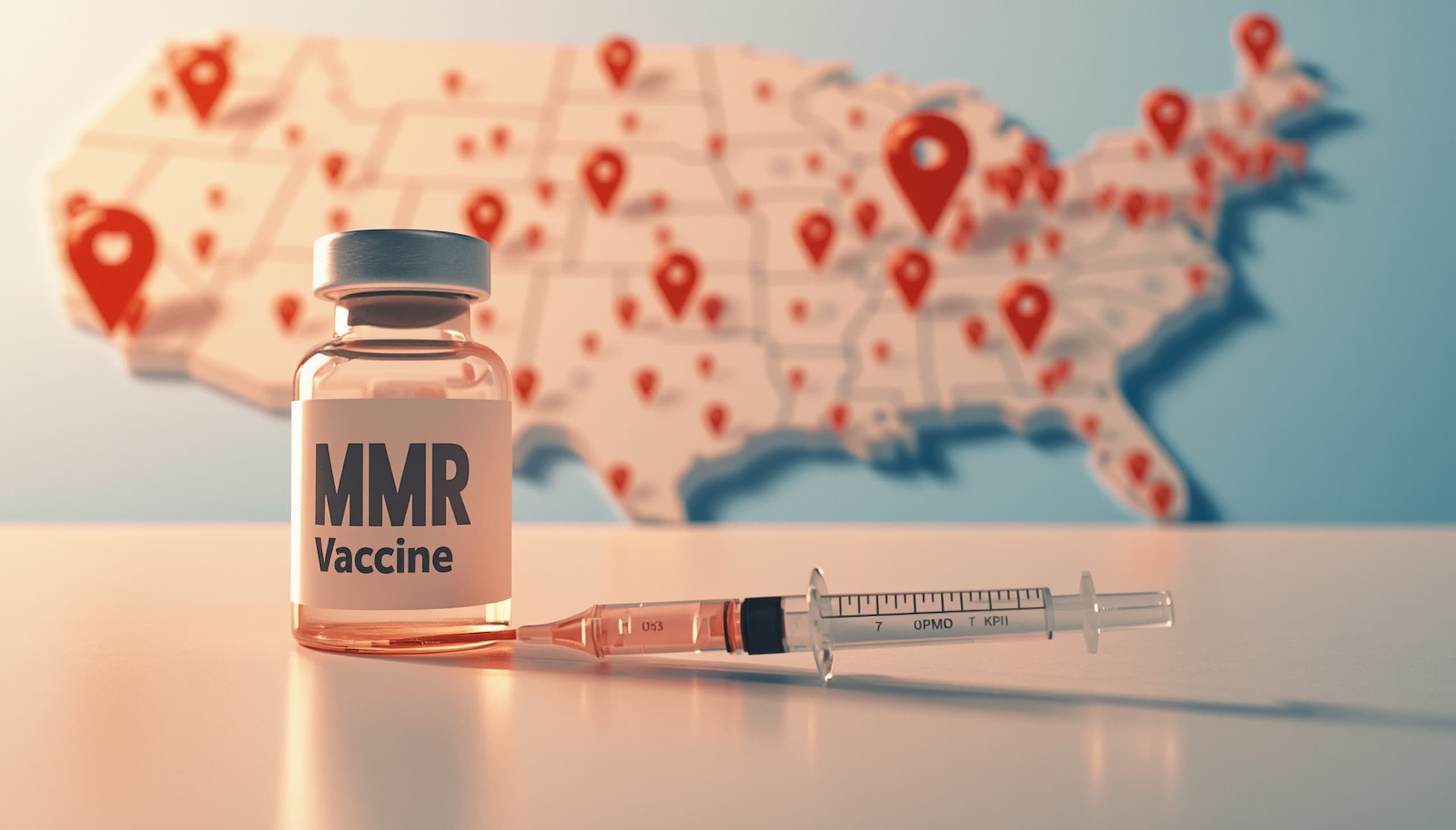
Warning: 2026 Measles Outbreak Hits 40 States — Doctors Say Act Now
Measles outbreak 2026 has become America’s most alarming public health emergency of the year: the CDC has confirmed 1,952 cases across 40 US states as of May 21, 2026 — putting the country at risk of losing its measles elimination status for the first time since 2000 (CDC, 2026). Declining MMR vaccine coverage among school-age children is the primary driver, with kindergarten vaccination rates falling to just 92.5% nationally during the 2024–2025 school year. This article explains what measles symptoms look like, who is most at risk, what the science says about the MMR vaccine, and the exact steps you can take right now to protect yourself and your family.
How Serious Is the 2026 Measles Outbreak?
The measles outbreak 2026 is unlike anything the United States has seen in a generation. As of May 21, 2026, the CDC has confirmed 1,952 measles cases in 40 jurisdictions — already approaching the full-year 2025 total of 2,288 cases with more than half the year still ahead (CDC, 2026). Health officials warn that increased summer travel will accelerate transmission further in the coming months.
A staggering 93% of all 2026 cases are tied to one of 29 active outbreaks, and 94% of patients are unvaccinated or have an unknown vaccination status (CDC, 2026). The US has held measles elimination status — meaning no continuous domestic spread for more than one year — since 2000. Authorities are scheduled to reassess that status in November 2026, and the current trajectory puts it at serious risk.
Why Are Measles Cases Rising in 2026?
The central cause of the measles outbreak 2026 is falling vaccination coverage. Kindergarten MMR vaccine rates dropped from 95.2% during the 2019–2020 school year to 92.5% in 2024–2025 (CDC, 2026). That 2.7-percentage-point drop translates to hundreds of thousands of unprotected children entering schools and community spaces each year. Herd immunity against measles requires at least 95% coverage — a threshold fewer than 10 US states currently maintain, according to the CDC.
A rise in vaccine exemptions, fueled in part by misinformation spread on social media, has compounded the problem. Children aged 19 and under account for 84% of all 2026 measles cases, and children under age 5 represent 25% of that group (CDC, 2026). For more context on how community health decisions affect families, visit our Health coverage hub.
Measles Symptoms: What to Watch For in 2026
Measles symptoms typically appear 7 to 14 days after exposure to the virus (CDC, 2026). The early phase is easily confused with a common cold or flu, which is one reason the measles outbreak 2026 spreads so quickly before patients realize they are contagious. Knowing the warning signs can help you seek care before the infection spreads to others.
The disease progresses in stages. Early symptoms give way to a distinctive rash roughly three to five days later. A person with measles is contagious from four days before the rash appears through four days after — meaning spread often occurs before the infection is even recognized (Mayo Clinic, 2026).
Stage-by-Stage Measles Symptom Breakdown
The initial symptoms of measles include high fever (which can reach 105°F / 40.6°C), persistent cough, runny nose, and red watering eyes known as conjunctivitis (Mayo Clinic, 2026). Two to three days after these first symptoms, small white spots called Koplik spots may appear on the inside of the cheeks. These spots are a hallmark sign that distinguishes measles from other viral illnesses and should prompt immediate medical evaluation.
The measles rash typically begins as flat red spots at the hairline and spreads downward across the face, neck, trunk, and limbs over three to five days. At this point, the virus is highly active and contagious. The rash alone is not the only danger — it is the complications that make measles a medical emergency, particularly in young children, pregnant individuals, and anyone with a compromised immune system.
Key Benefits and Risks: MMR Vaccine vs. Measles Infection
The MMR vaccine is the most powerful tool against the measles outbreak 2026. Two doses provide 97% protection against measles; a single dose provides approximately 93% protection (CDC, 2026). The vaccine is given to children at 12–15 months for the first dose and again at 4–6 years before school entry, with most people protected for life after completing the two-dose series (CDC, 2026).
Critics sometimes point to mild side effects as reasons for hesitation. The most common reactions — soreness at the injection site, a low-grade fever, and occasionally a temporary mild rash — are far less serious than the complications measles itself can cause. The CDC, Mayo Clinic, and virtually every major medical authority agree that the benefits of the MMR vaccine far outweigh its risks (CDC, 2026).
| Potential Benefits of MMR Vaccine | Risks of Measles Infection (Unvaccinated) | Evidence Level |
|---|---|---|
| 97% protection against measles with 2 doses | Up to 90% chance of infection if exposed and unvaccinated | Strong |
| Lifelong immunity for most recipients | Ear infection in 1 in 10 children with measles | Strong |
| Protects infants and immunocompromised who cannot be vaccinated via herd immunity | Pneumonia: a common and potentially fatal complication | Strong |
| Side effects mild: injection site soreness, low-grade fever | Encephalitis (brain swelling) in 1 in 1,000 cases | Strong |
| Protects against mumps and rubella simultaneously | Pregnancy loss, preterm birth, or fetal death in pregnant individuals | Strong |
Who Should Get the MMR Vaccine During the 2026 Measles Outbreak?
The CDC recommends that all children receive two MMR doses on the standard schedule. Adults born after 1957 who have no documented immunity — through prior illness or vaccination records — should receive at least one dose, and two doses if they are healthcare workers, college students, or planning international travel (CDC, 2026). If you are unsure of your vaccination history, a blood test can confirm immunity.
During an active outbreak, the CDC has authorized early vaccination for infants as young as 6 months in affected areas. If a child in this age group is vaccinated early, the two standard doses at 12–15 months and 4–6 years are still needed afterward. For families navigating these decisions, explore our Lifestyle section for practical wellness tips alongside your healthcare provider’s guidance.
When to See a Doctor About Measles Symptoms
Given the scale of the measles outbreak 2026, the CDC and Mayo Clinic urge anyone who suspects exposure to contact a healthcare provider immediately — before going to a clinic or emergency room in person (Mayo Clinic, 2026). Calling ahead allows facilities to take precautions that prevent measles from spreading to other patients, including vulnerable infants who are too young to be vaccinated.
Post-exposure prevention is time-sensitive. If an unvaccinated person is exposed to measles, receiving the MMR vaccine within 72 hours of initial exposure may still prevent infection or reduce its severity (CDC, 2026). An alternative — immune globulin — can be administered up to six days after exposure and is recommended for infants under 12 months, pregnant individuals, and immunocompromised people who cannot receive the live vaccine.
High-Risk Groups Requiring Urgent Medical Attention
Measles is most dangerous for specific groups who face a higher-than-average risk of severe complications. Children under age 5 face the greatest risk of pneumonia and encephalitis from measles infection (Mayo Clinic, 2026). Adults over 20 are also at elevated risk of complications — a fact that surprises many people who associate measles only with young children. Pregnant individuals should seek immediate medical guidance if exposed to measles, as the infection raises the risk of pregnancy loss, preterm labor, and low birth weight.
People with weakened immune systems — including those undergoing chemotherapy, organ transplant recipients, or individuals with untreated HIV — cannot receive the live MMR vaccine and must rely on herd immunity and immune globulin for protection. This is precisely why maintaining high community vaccination rates is not just a personal health decision but a public responsibility. During the measles outbreak 2026, every unvaccinated individual creates a potential gap through which the virus can reach those most vulnerable.
Scientific Evidence on the MMR Vaccine and the 2026 Measles Outbreak
The science behind the MMR vaccine is among the most extensively studied bodies of evidence in all of medicine. Two doses of the measles, mumps, and rubella vaccine have been shown to be 97% effective at preventing measles infection (CDC, 2026). The vaccine works by introducing a live-attenuated (weakened) form of the measles virus, prompting the immune system to build lasting antibody protection without causing disease (NIH / NCBI, 2026).
Decades of population-level data confirm that the measles vaccine program was responsible for eliminating endemic measles transmission in the United States by 2000 — an achievement credited with saving millions of lives (NCBI, 2026). The current measles outbreak 2026 is a direct consequence of that protection eroding as vaccination rates fell below the herd immunity threshold of 95%.
What the Data Shows About Unvaccinated Risk in 2026
The CDC’s 2026 outbreak data makes the stakes unmistakably clear. Among all confirmed measles cases so far this year, 94% are in individuals who were unvaccinated or whose vaccination status was unknown (CDC, 2026). Measles is one of the most contagious infectious diseases known — if one person is infected, up to 9 out of 10 unvaccinated people in close contact will also become infected (CDC, 2026). By contrast, fully vaccinated individuals have demonstrated robust protection even in areas experiencing active outbreaks.
Research published in NCBI’s StatPearls series (2026) confirms that the MMR vaccine stimulates durable immune memory in the vast majority of recipients, with most people protected for life after two doses. There is no credible scientific evidence linking the MMR vaccine to autism — a claim that has been thoroughly investigated and rejected by multiple independent studies across dozens of countries. Health organizations including the CDC, WHO, and Mayo Clinic consistently reaffirm the safety and necessity of measles vaccination, especially during a measles outbreak 2026 of this magnitude.
| Metric | 2026 Data (as of May 21) | Context |
|---|---|---|
| Total confirmed cases | 1,952 | On pace to exceed 2025 full-year total of 2,288 |
| States and jurisdictions affected | 40 | Includes DC; all regions of the US |
| Active outbreaks in 2026 | 29 | 93% of cases are outbreak-associated |
| Unvaccinated or unknown status | 94% of cases | Consistent with prior outbreak data |
| Cases under age 19 | 84% | Children under 5 represent 25% of all cases |
| Kindergarten MMR coverage (2024-25) | 92.5% | Down from 95.2% in 2019-2020; below 95% herd immunity threshold |
Final Thoughts
The measles outbreak 2026 is a preventable crisis. With 1,952 confirmed cases across 40 states and the US elimination status on the line, the evidence points clearly in one direction: the MMR vaccine remains the safest, most effective tool available to stop the spread. Check your family’s vaccination records today, speak with your doctor if you’re unsure of your immunity status, and share this article to help others make informed decisions. For ongoing updates, bookmark our Health section — and visit our Lifestyle hub for practical prevention strategies you can start using right now.
What Do You Think?
Has the 2026 measles outbreak changed how you think about vaccination for your family? Share your thoughts in the comments below — and pass this article along to anyone who needs to know the facts.
Frequently Asked Questions
How contagious is measles during the 2026 outbreak?
Measles is one of the most contagious viruses known to medicine. During the measles outbreak 2026, the CDC confirms that if one infected person enters a room, up to 9 out of 10 unvaccinated people exposed will contract the disease (CDC, 2026). The virus can linger in the air for up to two hours after an infected person has left a space. This extraordinary contagiousness is why falling vaccination rates have triggered such a rapid nationwide surge.
Is the MMR vaccine safe for adults who were vaccinated as children?
For most adults who received two doses of the MMR vaccine, protection is lifelong and no additional dose is required. However, adults born after 1957 with no documented immunity should receive at least one dose. During the measles outbreak 2026, the CDC confirms there is no harm in receiving an additional dose if your records are incomplete — the MMR vaccine is safe, and serious reactions are extremely rare (CDC, 2026). Talk to your provider about your specific history.
What are the first signs of measles symptoms I should watch for?
The earliest measles symptoms appear 7 to 14 days after exposure and include high fever (up to 105°F), persistent cough, runny nose, and red watering eyes (Mayo Clinic, 2026). Two to three days later, small white Koplik spots may appear inside the mouth — a hallmark sign of measles. The distinctive red rash follows three to five days after initial symptoms. During the measles outbreak 2026, call your doctor immediately if you notice any combination of these signs rather than visiting a clinic unannounced.
Can the MMR vaccine be given after measles exposure?
Yes — and timing is critical. The MMR vaccine can prevent measles or reduce its severity if administered within 72 hours of initial exposure to an infected person (CDC, 2026). For infants under 12 months, pregnant individuals, and those with weakened immune systems who cannot receive the live vaccine, immune globulin can be given within six days of exposure. During the measles outbreak 2026, post-exposure action is one of the most powerful tools available — but only if you act fast.
References
- CDC (Centers for Disease Control and Prevention) — Measles Cases and Outbreaks 2026
- CDC — About Measles: Symptoms, Transmission, and MMR Vaccine Protection
- Mayo Clinic — Measles — Symptoms and Causes
- Mayo Clinic — Measles — Diagnosis and Treatment
- NIH / NCBI StatPearls — MMR Vaccine — StatPearls (2026)
- U.S. News & World Report — Tracking US Measles 2026: 1,900 Cases Put Elimination Status at Risk